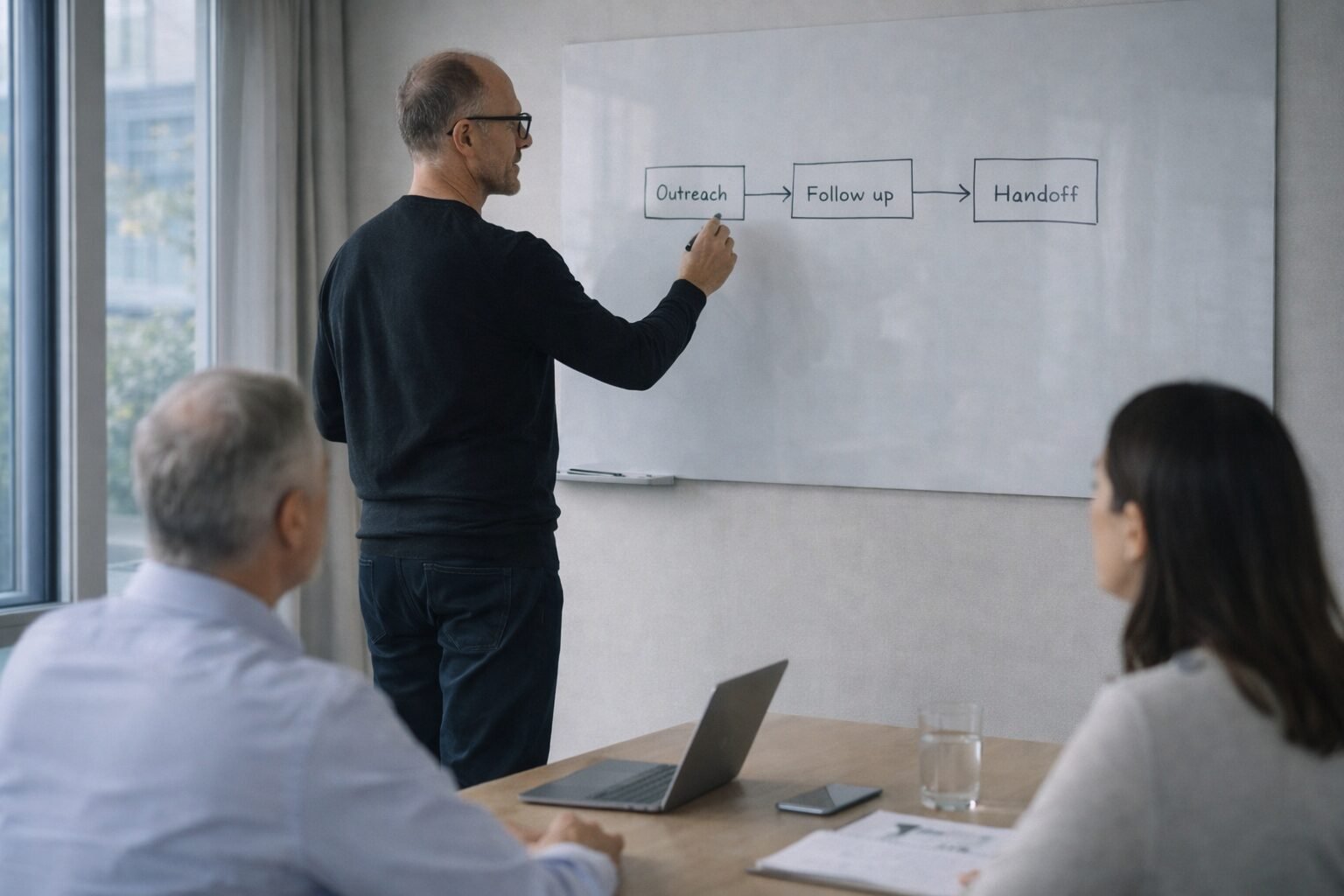
GoPartnering works with B2B teams where the work is solid but the commercial path still feels uneven. Follow up slips. Messaging is too broad. Too much sits in one person’s head.
The first step is usually a Readiness Check. If the issue is real but still a bit blurred, Pulse Check goes deeper. Where there’s a fit, the main build is often a 90 day sprint with LinkedIn at the centre and handover built in from the start.
This is not a broad agency retainer. It is focused commercial work, done in a way your team can keep using after the build.
Lead flow depends too much on a founder, one salesperson, or manual follow up that never quite settles into a rhythm.
Clearer buyer direction. Better LinkedIn messaging. Cleaner follow up. Stronger handover between message, meeting, and next step.
Not noisy outreach for its own sake. Not a pile of channels at once. Not a system that only works while an outside operator is there.
Mikael Lindback leads GoPartnering. He works close to the actual message, the buyer response, the follow up, and the handover. The thinking and the delivery stay joined up.
He tends to work best with founder led B2B teams, consultancies, and technical firms that already have something real to sell but need a cleaner path from first signal to proper sales conversation.
LinkedIn often sits at the centre because it shows real buyer behaviour fast. Who replies. What lands. Where proof is missing. Where the next step is too vague. That signal helps shape better decisions early.
For a lot of B2B firms, LinkedIn is the cleanest place to start. It keeps message, proof, follow up, and booking close enough to see what is really working.
You see real buyer reactions faster than with a broader channel mix. That makes it easier to tighten the offer and the message without wasting months.
Named people, visible context, and direct replies suit consultative B2B work. It is easier to see whether the fit is real before forcing a meeting.
A simpler system is easier for the client team to keep running. Message, follow up, booking logic, and CRM thinking can be documented and passed on properly.
The order matters. Some businesses need a quick first read. Some need a harder look at the real blockage before any sprint makes sense. The build only starts when the issue is clear enough to act on.
That keeps the work grounded. No rushing into activity just to feel movement.
A short conversation with Mikael to see whether the problem is real, current, and worth fixing now. Clear first judgement. No pitch theatre.
A deeper working session when buyer clarity, offer shape, or LinkedIn message still need tightening before a sprint can be scoped cleanly.
A focused build around LinkedIn led outreach, follow up, booking path, and handover. Done to create an owned system, not another outside dependency.
EverCert is a useful public case because the aim was practical. Stop relying on outsourced lead generation. Build an owned LinkedIn based system instead. Make it easier for the team to keep using what was built.
The first booked sales meeting came in about 4 weeks from sprint start. The old outsourced setup was roughly 30,000 AUD a year. The owned system landed at roughly 4,800 AUD a year. One early meeting also closed.
Start with the client story or go straight to the case page. Both give a better feel for the work than vague claims ever will.
Especially where too much still depends on one person carrying pipeline, follow up, or message quality.
Where trust matters in the sale and good conversations are being lost through weak follow up or loose handover.
Where there is real substance in the offer, but the commercial path still feels harder to explain, repeat, or hand over.
No. It is often the main source at the start because it gives cleaner B2B signal and keeps the first system simpler. Other channels can follow where there is a real reason.
Readiness Check is the first read. Pulse Check is a deeper working session when the issue is real but the offer, buyer, or message still need more shape before a sprint makes sense.
No. The work is scoped around a real commercial problem and built toward internal ownership. The aim is useful handover, not long term dependence.
Yes, where it helps the work become clearer, steadier, or easier for the team to keep using. Not as decoration. Not as a substitute for judgement.
A real issue, someone on the client side who will own the work, and enough honesty to tighten what is not landing yet.
If the commercial path still feels too dependent on one person, or if LinkedIn activity exists without a clean system around it, the Readiness Check is the right place to start.
This page is here to show how GoPartnering works before you decide whether to get in touch.
If it looks like the right shape, the next conversation can stay direct and grounded in your actual situation.
GoPartnering is a brand operated by Mountain Air.
We use cookies to improve your experience on our site. By using our site, you consent to cookies.
Manage your cookie preferences below:
Essential cookies enable basic functions and are necessary for the proper function of the website.
These cookies are needed for adding comments on this website.
Google reCAPTCHA helps protect websites from spam and abuse by verifying user interactions through challenges.
Statistics cookies collect information anonymously. This information helps us understand how visitors use our website.
Google Analytics is a powerful tool that tracks and analyzes website traffic for informed marketing decisions.
Service URL: policies.google.com (opens in a new window)