
You have tried outsourced lead generation. The results levelled off. Your team still does not own the process.
Your first qualified meeting in four weeks. Your team runs it after that.
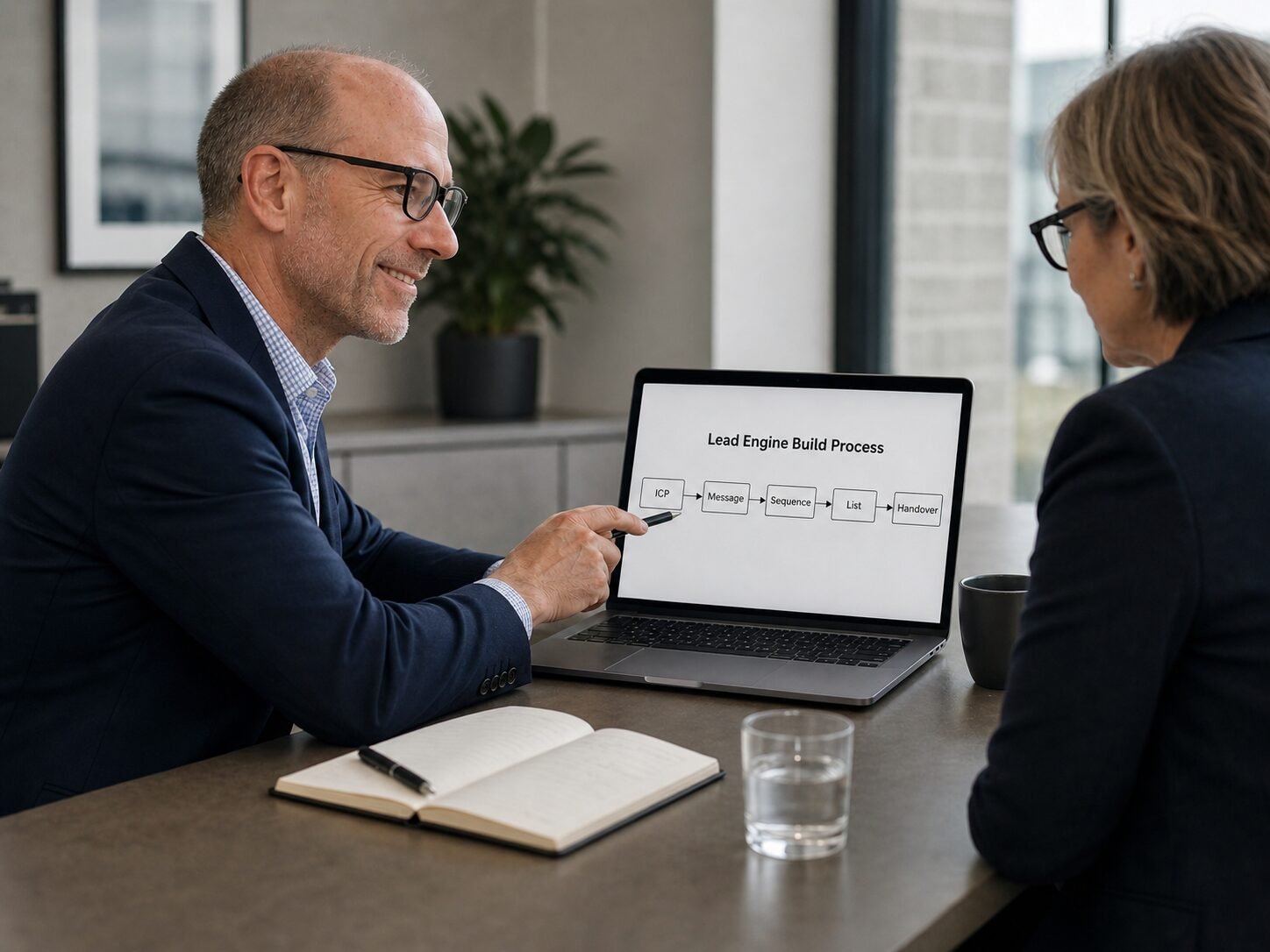
A 90-day build for founder-led B2B service firms. One working lane. Clean handover. No ongoing dependence on an outside operator.

EverCert: A$30,000 a year down to A$4,800
EverCert is an ISO certification and HSEQ consulting firm in Sydney. The brief was to build a lead engine the team could keep running after handover, not add more outsourced activity.
The sprint paid for itself in under two months of cost savings.
EverCert stayed with GoPartnering after seeing real commercial results, a leaner cost structure, and a clearer path to scale.
Steve Ebejer, EverCert. Public LinkedIn recommendation and video testimonial.Practical. Specific. Built to be handed over.
LinkedIn-first, because it is the clearest starting lane for B2B sales where trust matters before someone agrees to a meeting. Other channels follow when there is a real reason.
- Sharper buyer direction and a one-breath pitch
- LinkedIn outreach structure the team can repeat without you
- Follow-up logic that does not depend on one person
- Booking and reply handling that feels natural
- Clean internal documentation and handover
The question itself is usually the signal
This fits when you are already spending on outsourced lead generation, the results have levelled off, and you have started wondering whether your team could just own this themselves.
If you are asking that question seriously, the fit is probably real. The Readiness Check will confirm it either way.
Best fit
Founder-led B2B service firms, consultancies, compliance and advisory businesses, and specialised technical providers. Team of 3 to 20. A real offer. Paying clients. Already spending on the problem.
Not the fit
B2C, volume offers, no paying clients yet, or teams wanting broad channel expansion before one lane is proven.
Three steps. Nothing starts until the fit is confirmed.
Two short conversations before anything is agreed. If the fit is not there, that comes out early.
Readiness Check
A short fit conversation. No cost. If the problem is not real or current, that gets said plainly.
TrueMark / A$990
A 45-minute session to establish who the buyer is, what signal means they are ready right now, and whether the offer is ready to deploy. Produces a written Buyer Signal Report. Fee comes off the sprint if you proceed.
90-day sprint / A$4,800
Build the engine, support the team through the motion, hand the system over in a form they can keep running. TrueMark fee deducted from this total.
Clear pricing. No surprises.
TrueMark
45-minute commercial intelligence session. Buyer Signal Report delivered the same day. Standalone or as step one toward the sprint.
Fee deducted from sprint if you proceed90-Day Sprint
Build, support, and hand over a working lead engine your team owns completely after sprint end.
TrueMark fee deducted from this totalOngoing Support
GoPartnering keeps the engine running and campaigns optimised. Self-managed teams need roughly 30 minutes a week.
The sprint pays for itself in under two months. EverCert moved from A$30,000 in annual outsourced spend to A$4,800 for the full build.
What teams usually ask first
How quickly will we see results?
The EverCert case showed a first booked qualified meeting in about four weeks from sprint start. That is a reference point, not a promise.
What does ongoing cost look like after the sprint?
Self-managed teams pay tool infrastructure only, typically under A$200 per month. If you want GoPartnering to manage optimisation and lead flow, ongoing support is A$1,000 per month.
Start with the Readiness Check. No cost. No commitment.
A short conversation to confirm the fit. If it is real, the next step is TrueMark, a 45-minute session that tells you exactly who to target and whether you are ready to go.
The sprint pays for itself in under two months. A$30,000 in annual outsourced spend becomes A$4,800 after handover. TrueMark starts at A$990 and comes off the sprint if you proceed.