You have been paying for outsourced lead generation. The team still does not own the process.
We build the lead engine.
You keep it.
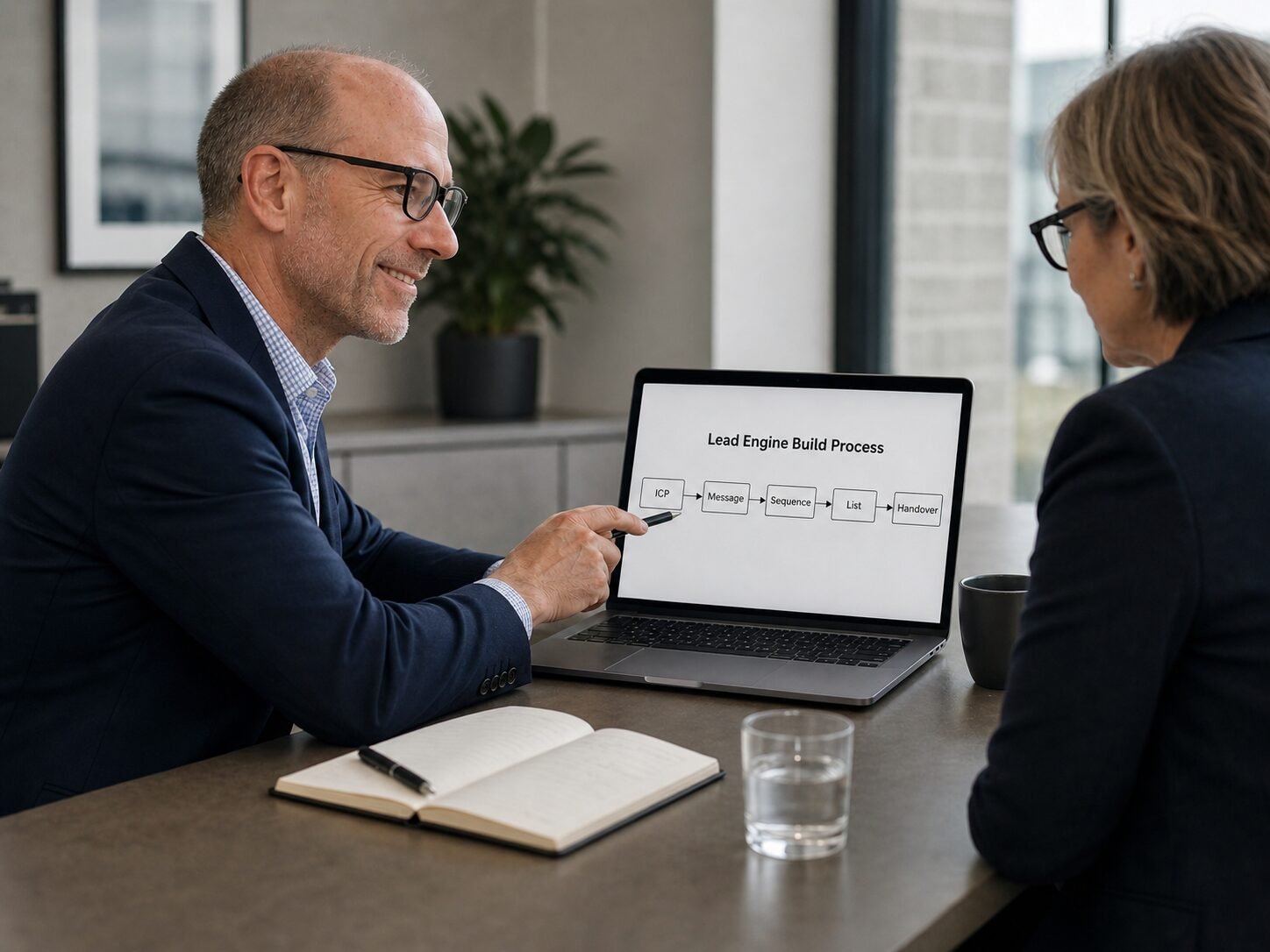
A 90-day build for founder-led B2B service firms that want a system their team can own and run after handover. No ongoing dependence. One sprint. Clean delivery.
Good results. Then a plateau. The spend keeps going.
Most founder-led teams trying to fix this have already paid for it. An agency. A specialist operator. Results that made sense early and then levelled off. The spend kept going. The team never fully owned what came next.
That is not a lack of effort. It is a system that was never built to be handed over.
Less suited to
B2C volume offers, very early ideas with no clear offer, or businesses expecting broad multi-channel scaling from day one.
EverCert: from A$30,000 a year to A$4,800
The brief was not to add more outsourced activity. It was to build an in-house lead engine the team could keep running after the sprint.
The first booked qualified prospect meeting came within four weeks of sprint start. After the sprint, ongoing cost dropped to infrastructure only. EverCert moved from a heavy outsourced setup to a system their team owns.
The sprint pays for itself in under two months of cost savings.
EverCert stayed with GoPartnering after seeing useful commercial results, a leaner commercial setup, and a clearer path to scale.
Based on Steve Ebejer's public recommendation and testimonial.Practical. Specific. Built to be handed over.
The work covers every part of the commercial path from first outreach to booked conversation. LinkedIn-first, because it is the clearest starting lane for considered B2B sales. Other channels follow when there is a real reason.
- Sharper buyer direction and one-breath pitch
- LinkedIn outreach structure the team can follow and repeat
- Follow-up logic that does not depend on one person remembering
- Booking and reply handling that feel natural
- Internal documentation and clean handover
The signal is the question itself
This fits best when you are already spending on outsourced lead generation, the results have levelled off, and you have started wondering whether your team could just own this themselves.
That question is the signal. If you are asking it, the fit is probably real.
Best fit
Founder-led B2B service firms, consultancies, compliance and advisory businesses, and specialised technical providers. Team of 5 to 20. Commercially minded. Already spending on the problem.
Usually not the fit
Pure B2C plays, volume offers, or businesses wanting broad channel expansion before one working lane is proven.
A clear path, not an open-ended engagement
Two short conversations before anything starts. That keeps the process honest and stops time being wasted on both sides.
Readiness Check
A short fit conversation to see if the issue is real, current, and worth solving now.
TrueMark
A deeper working session to sharpen buyer direction and offer clarity before the build starts.
90-day sprint
Build the lead engine, support the team through the working motion, and hand the system over in a usable form.
The sprint starts at $4,800 USD. After handover, ongoing cost is infrastructure only. $89 per LinkedIn account per month. Scope and fit are confirmed in the Readiness Check before anything is agreed.
What teams usually ask first
Is this an agency retainer?
No. The sprint is built around a real commercial problem and internal ownership. There is a clear end point and a proper handover. The aim is your team running this after delivery, not ongoing dependence on GoPartnering.
How quickly will we know if the direction is working?
Look for early signal, not guarantees. The EverCert case showed a first booked qualified meeting in about four weeks from sprint start. That is a useful reference, not a promise.
Do we need a full sales team already in place?
No. Most teams GoPartnering works with are small and stretched. But someone on your side needs to own the work and carry it forward after handover. That matters more than headcount.
Do you use AI in the work?
Yes, where it makes the system clearer, steadier, or easier for your team to keep using. Human judgement first. AI where it helps consistency. Not as decoration.
See if the fit is real before anything bigger
The Readiness Check is a short conversation. No commitment. If the problem is real and current, the next step is the TrueMark to sharpen direction before the build starts.
The sprint pays for itself in under two months of cost savings. A$30,000 in annual outsourced spend becomes A$4,800 after handover.
Build a B2B lead engine your team can run after the sprint
A focused 90 day sprint for founder led B2B service firms that want clearer messaging, stronger LinkedIn follow up, a cleaner booking path, and proper handover instead of ongoing dependence.
First booked qualified prospect meeting in the EverCert case.
Shared publicly by the client across the wider working relationship.
Client-reported uplift over the period of working together.
The pattern this fixes
This is aimed at founder-led and lean B2B service firms, consultancies, and specialised technical providers selling into other businesses through considered conversations.
That usually means the sale needs trust, follow up, and decent judgement. Not just volume.
Less suited to
B2C volume offers, very early ideas with no clear offer yet, or businesses expecting broad multi-channel scaling from day one.
When the founder still carries the commercial path, good leads cool off
In many lean B2B teams, the problem is not effort. It is movement.
Messages go out, but follow up is uneven. Replies come in, but ownership is not always clear. Momentum drops between first contact, first call, and the point where someone needs to take the next step.
That creates a familiar pattern. Good prospects sit too long. The founder steps back in. The team never fully owns the process.
What better looks like in practice
- Clearer buyer direction and a tighter one-breath pitch
- Outbound messaging the team understands and can repeat
- Follow up that does not depend on one person remembering everything
- Booking flow and handoff that feel natural
- Simple internal documentation the team can actually use
- A process that keeps running after handover
This is not about more noise
The aim is not more activity for the sake of it. It is better qualified conversations and a cleaner path from outreach to real discussion.
Own Your Lead Engine
A 90 day sprint for B2B teams that want a clearer LinkedIn-first outbound system they can run internally after handover.
The work is practical. Buyer. Offer. Message. Follow up. Booking flow. Handoff. Team rhythm.
Not a loose advisory retainer. Not outsourced dependency dressed up as strategy. A build with a clear end point and internal usability in mind.
How the path works
Readiness Check
A short fit conversation to see if the issue is real, current, and worth solving now.
Pulse Check
A deeper working session to sharpen buyer direction, offer clarity, and commercial focus before the build starts.
90 day sprint
Build the lead engine, support the team through the working motion, and hand the system over in a usable form.
Why LinkedIn is the main source in this sprint
Right now, the offer is built around LinkedIn-first outbound because it suits the kind of B2B sale where trust, context, and a decent first exchange matter.
That keeps the sprint focused. One main lane. Cleaner testing. Cleaner proof. Cleaner handover.
Other channels may be added later as GoPartnering expands and proves them properly.
What LinkedIn-first does not mean
It does not mean spammy volume.
It does not mean chasing vanity metrics.
It means a clearer outreach process built for considered B2B conversations.
What gets built during the sprint
- Sharper buyer direction and positioning
- One-breath message direction grounded in real conversations
- LinkedIn outreach structure the team can follow
- Follow up logic that supports steady movement
- Booking and reply handling that support real discussions
- Handoff thinking between commercial work and delivery
- Simple internal documentation and usable working rhythm
Two readiness tracks
Track A. Ready to run
For teams where buyer direction and offer are already fairly clear, and the main need is structure, consistency, and handover.
Track B. Sharpen before scaling
For teams where the sale is real, but positioning, buyer fit, or message direction still need work before more outbound is worth doing.
Proof from the field
EverCert is a useful example. The brief was not to add more outsourced activity. It was to build an in house lead engine the team could keep running after the sprint.
The first booked qualified prospect meeting came within 4 weeks of sprint start. In that case, acceptance sat in the 60% to 69% range and response in the 35% to 40% range.
The commercial shift mattered too. EverCert moved away from a much heavier outsourced setup to an owned system. After the sprint, the ongoing cost was mainly infrastructure.
EverCert stayed with GoPartnering after seeing useful commercial results, a leaner commercial setup, and a clearer path to scale.
Based on Steve Ebejer’s public recommendation and testimonial.Cost shift after the sprint. Moved from heavier outsourced spend to infrastructure led running cost.
Client reported over the wider engagement.
Shared publicly by the client.
Account options during the build
Use your own LinkedIn account
Often the best fit when the founder or senior operator is comfortable being the face of the outbound motion.
Add company-controlled verified accounts where suitable
For teams that want more scale or less dependence on one personal account. New accounts need a warm-up period before full use.
Who this fits best
Best fit
Founder-led and lean B2B teams where the offer is real, but the commercial path still feels too dependent on one person.
Often relevant for
Consultancies, agencies, specialised technical services, compliance and advisory firms, and other trust-led B2B offers.
Usually not the fit
Cheap volume offers, pure B2C plays, or businesses wanting broad channel expansion before one working lane is proven.
FAQ
Is LinkedIn the only source
No. It is often the cleanest place to start because it gives better B2B signal early. Other channels can follow when there is a real reason.
Is this an agency retainer
No. The sprint is built around a real commercial problem and internal ownership, not ongoing dependence.
What is the difference between the Readiness Check and the sprint
The Readiness Check is the first read. The sprint is the build that follows if the issue is real and the fit is sound.
What do ongoing costs look like after the sprint
Scope and sprint pricing are discussed privately after fit is clear. After the sprint, ongoing cost is the infrastructure you choose to keep.
How quickly will we know if the direction is working
Look for early signal, not guarantees. The public EverCert example showed a first booked sales meeting in about 4 weeks from sprint start.
Do I need a full sales team already in place
No. But someone on your side needs to own the work and carry it forward after handover.
Do you use AI in the work
Yes, where it makes the system clearer, steadier, or easier for your team to keep using. Not as decoration.
See if the fit is real before committing to the sprint
Start with the Readiness Check. If the problem is real and current, the next step is the Pulse Check to sharpen direction before the build begins.